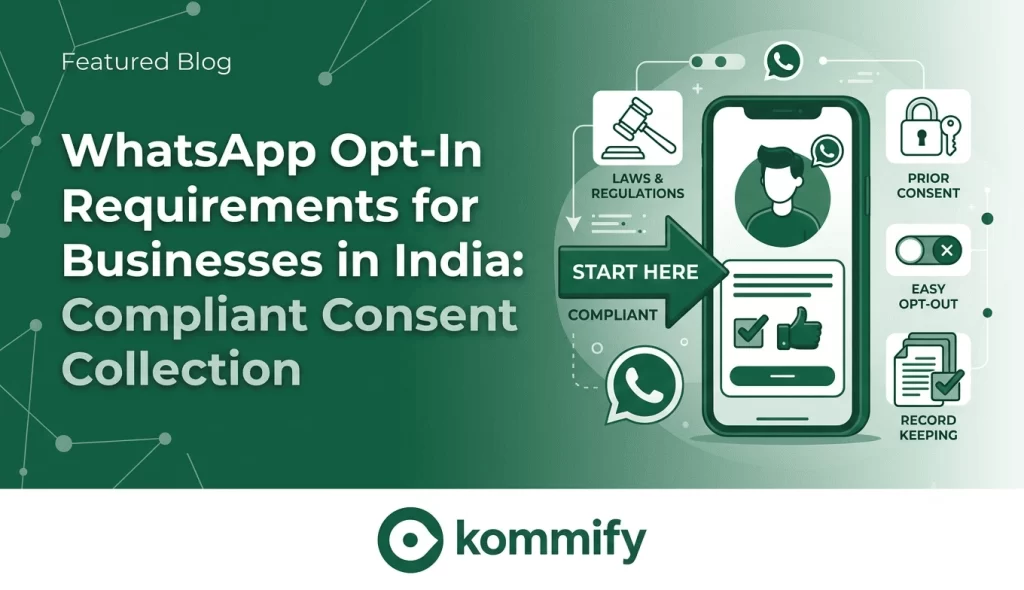
⚡ Quick Answer
WhatsApp Business API requires explicit opt-in consent before sending any business-initiated messages. Opt-in must clearly state that the customer is consenting to receive WhatsApp messages from your specific business. Acceptable opt-in channels include website checkboxes, SMS confirmation, IVR confirmation, and in-app prompts. Pre-checked boxes are not valid opt-in. India’s DPDP Act 2023 applies additional consent requirements.
WhatsApp Opt-In Requirements India: How to Collect Compliant Consent
This is the compliance topic that most businesses treat as an afterthought — until Meta flags their account for quality issues or suspends them for sending to non-opted-in users. Getting opt-in right isn’t just about following rules; it directly affects your message quality score, your delivery rates, and ultimately whether WhatsApp continues to work for your business.
What Meta Requires for WhatsApp Opt-In
Meta’s policy is clear: before sending any business-initiated template message, you must have explicit consent from the user to receive WhatsApp messages from your business specifically. The consent must:
- Clearly name your business (not just “receive marketing messages”)
- Clearly state the channel is WhatsApp (not generic “receive updates”)
- Be an active choice — pre-checked checkboxes are not valid
- Allow easy opt-out at any time
Valid Opt-In Channels for Indian Businesses
Website/App Checkbox (Most Common)
During checkout, registration, or a dedicated sign-up form: an unchecked checkbox with text like “I agree to receive order updates and promotional messages from [Business Name] on WhatsApp at the number provided. You can opt out at any time by replying STOP.”
SMS Confirmation
Send an SMS asking the customer to confirm WhatsApp opt-in: “Reply YES to receive WhatsApp messages from [Business Name].” Works well for phone-number-captured leads from offline sources.
WhatsApp Itself — Click-to-WhatsApp Ads
When a customer clicks a Facebook/Instagram ad that opens a WhatsApp chat, their action of initiating the conversation constitutes opt-in for service messages. For marketing templates, you still need explicit consent, but many businesses use the initial conversation to collect it.
IVR/Call Confirmation
For businesses with call center flows: “Press 1 to receive your appointment details and reminders on WhatsApp.” Common in healthcare, insurance, and financial services sectors in India.
⚠️ Watch Out
India’s Digital Personal Data Protection (DPDP) Act 2023 is now in force. For WhatsApp consent, this means: consent must be informed, specific, and freely given; you must maintain a record of when and how consent was collected; withdrawal of consent must be easy and honoured promptly. Businesses that can’t demonstrate consent records face regulatory risk beyond Meta account suspension.
What to Do With Your Existing Customer List
This is the question nobody wants to answer: can you use your existing customer database to send WhatsApp messages? The honest answer: only if you have a documented record of their prior consent to specifically receive WhatsApp messages.
If you have mobile numbers from past purchases but no WhatsApp consent on record, you cannot legally send them WhatsApp API messages. What you can do: run an opt-in campaign through email or SMS asking them to opt in, or use Click-to-WhatsApp ads to have them initiate the conversation themselves.
📊 Industry Data
Businesses that skip proper opt-in collection and import raw CRM lists into WhatsApp see block rates of 3-8%. When a sufficient percentage of recipients block your number, Meta drops your phone number quality rating to “Red” — restricting your daily message limit to 1,000 conversations/day, a 97% reduction from the standard 100,000 limit.
Frequently Asked Questions
Can I use my existing customer database for WhatsApp marketing without re-consent?
Only if you have documented, specific consent for WhatsApp messaging — not just general marketing consent from a terms acceptance years ago. When in doubt, run a re-consent campaign via email or SMS before launching WhatsApp outreach.
What is double opt-in for WhatsApp and do I need it?
Double opt-in means the customer confirms their consent twice — once at sign-up and once via a confirmation message. Meta doesn’t require double opt-in, but it significantly reduces block rates and keeps your quality rating high. Recommended for any high-volume marketing use case.
How do I handle opt-outs on WhatsApp Business API?
Set up a keyword listener in your BSP dashboard — when a customer replies “STOP,” “UNSUBSCRIBE,” or “OPT OUT,” automatically add them to your suppression list and stop sending. Kommify handles this automatically. Continuing to message opted-out users is a policy violation.